How to Set Up a Home Office in a Small Space (2026 Guide)
Disclosure: As an Amazon Associate, UnfoldDesk earns from qualifying purchases at no extra cost to you.
Setting up a home office in a small space takes planning, not square footage. The trick is to think vertically, choose furniture that folds or tucks away, and decide what stays out versus what hides. This guide walks through the whole process — picking the spot, choosing the desk and chair, going vertical for storage, taming cables, and getting the lighting right — so you end up with a workspace that functions like a real office without taking over the room. A small home office still needs to be comfortable; the Mayo Clinic office-ergonomics guide covers the posture basics every home office should get right.
Why Small-Space Setups Need a Different Approach
Standard home-office advice assumes a spare room. In a studio, a bedroom corner, or a shared space, every item has to earn its footprint, and the office often has to vanish or blend in when you’re off the clock. So the guiding rule is simple: minimize floor footprint, use the walls, and make as much as possible fold, tuck, or double up.
Step 1: Choose the Right Spot
Look for underused space before you buy anything: a wall gap, an alcove, the end of a bed, a corner, or beside a window for natural light. The best spot keeps you out of walkways and, ideally, lets the desk fold or tuck away. Measure the width and depth of that exact spot — with the chair pulled out — before shopping.
Step 2: Pick a Space-Smart Desk
The desk is the anchor. Match the type to your room:
- Shared/living space: a folding desk that disappears after work.
- Own your place: a wall-mounted desk for zero floor footprint.
- One permanent corner: a shallow compact desk, ideally under 18 inches deep.
Whatever you choose, prioritize depth — a 15–18 inch deep desk leaves far more room than a standard 24-inch one.
Step 3: Choose a Chair That Tucks Away
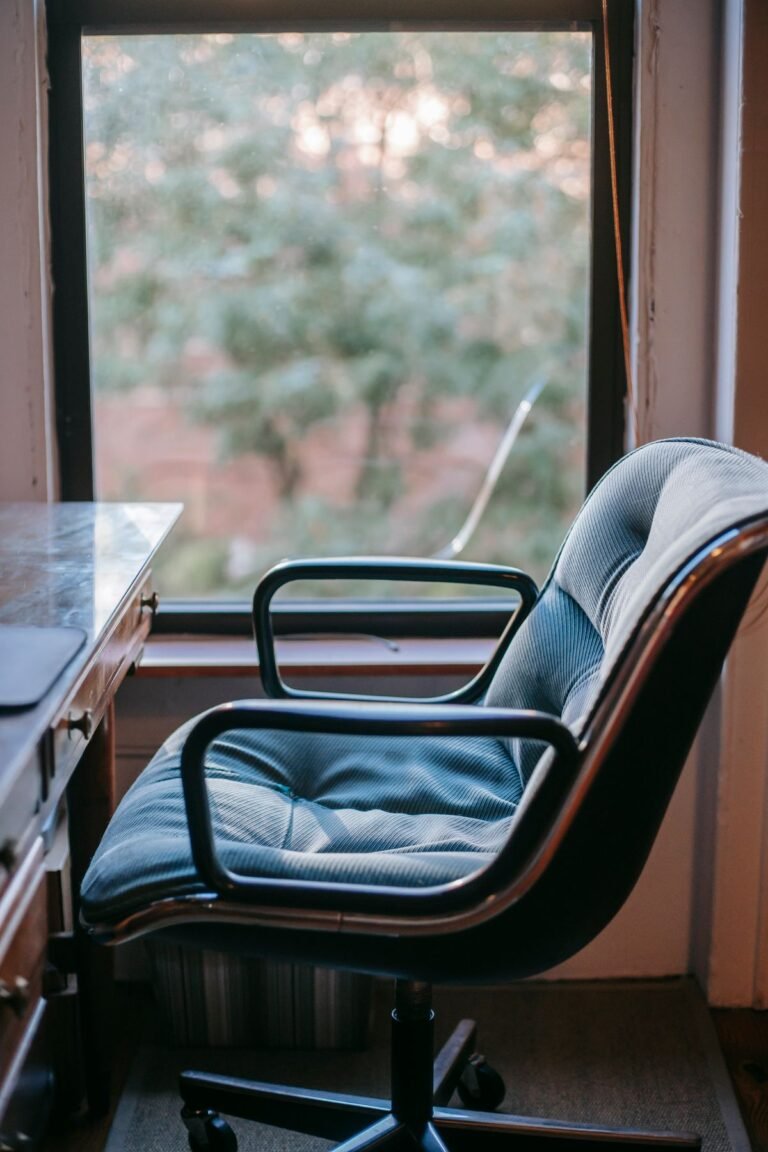
An armless chair is the small-space secret: with no armrests, it slides fully under the desk and clears the walkway when you’re not sitting. A low-back, breathable mesh chair keeps the visual footprint small too. If even that’s too much, a folding chair or stool works for short sessions.
Step 4: Go Vertical for Storage
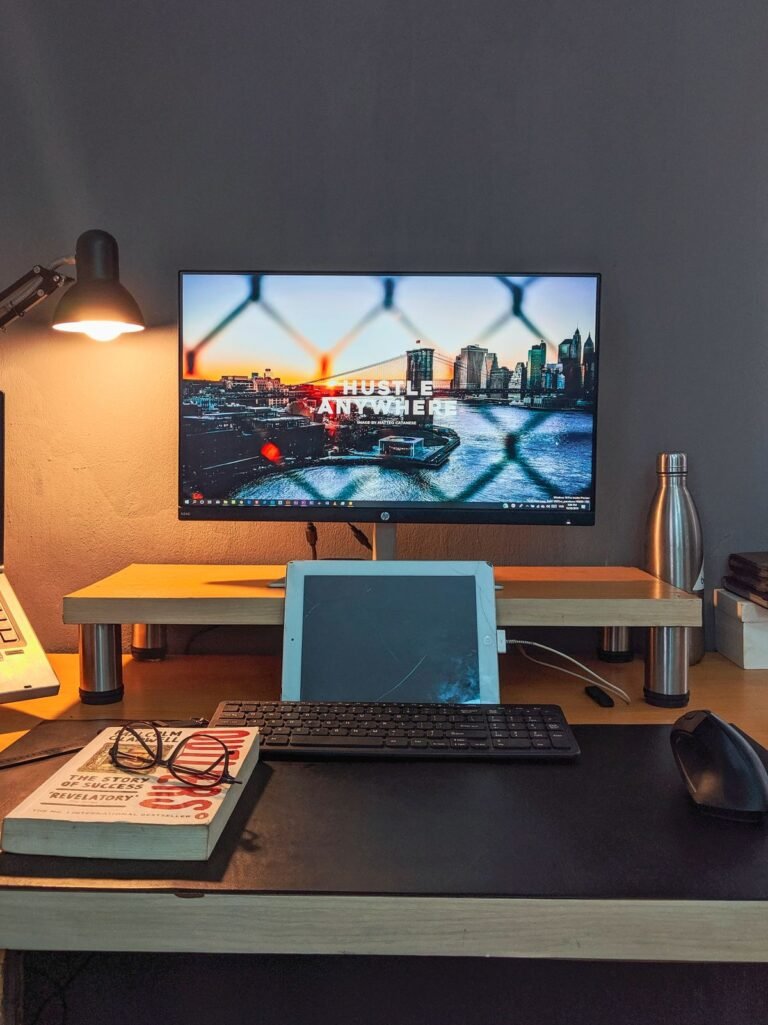
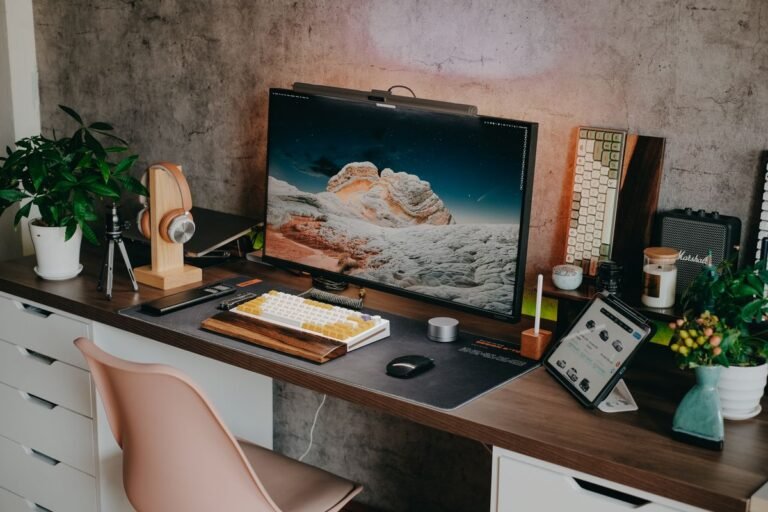
Floor space is precious, so build upward. Floating shelves above the desk, a pegboard for supplies, and a monitor riser with a drawer all add storage without consuming floor area. The goal is to get everything off the desktop and off the floor, which instantly makes a small office feel larger and calmer.
Step 5: Tame the Cables
In an open or shared room, cables are always visible, so plan for them from the start. Get the power strip off the floor with an under-desk tray, bundle cords with a sleeve, and hide the rest in a box. A clean cable setup is the cheapest upgrade that makes a small workspace look intentional — see our cable management guide for the full toolkit.
Step 6: Get the Lighting Right
Good lighting prevents a cramped space from feeling like a cave. Position the desk near a window if you can, then add a compact task lamp — ideally a clamp-on or slim model that doesn’t eat desk surface. Aim the light across your work, not into your screen, to avoid glare on video calls.
Common Mistakes to Avoid
- Buying the desk first: measure the spot before you shop, not after.
- Ignoring depth: a desk that fits the wall can still jut into the room.
- Keeping everything on the desktop: go vertical so the surface stays clear.
- Leaving cables for “later”: they’re visible in an open space — handle them on day one.
- Over-furnishing: one good shelf beats three bulky storage units in a small room.
Setting Up Your Small Home Office
A small home office works when you trade floor space for function. The home office tips above — a space-smart desk, an armless chair, vertical storage, and tidy cables — apply to any room. Plan your home office around the spot you have and it will feel bigger than its footprint.
Bottom line: a small home office works when every piece is chosen for its footprint. Go vertical, pick furniture that folds, and your home office can fit almost anywhere — the best small home office feels intentional, not cramped.
Related Buying Guides
Frequently Asked Questions
How do I set up a home office in a small space?
Start by choosing an underused spot and measuring it, then pick a space-smart desk (folding, wall-mounted, or shallow compact), an armless chair that tucks under, vertical storage like shelves, and a tidy cable setup. The key is minimizing floor footprint and using your walls.
What’s the most important piece of a small home office?
The desk, because it anchors the whole setup and determines how much floor space you keep. A folding or shallow desk that fits your exact spot does more for a small room than any other single choice.
How do I store things without floor space?
Go vertical. Floating shelves, a pegboard, and a monitor riser with a drawer add storage above and around the desk instead of on the floor, which keeps a small office open and uncluttered.
Can I have a home office in a studio apartment?
Yes. A folding or wall-mounted desk gives you a real work surface that disappears afterward, and an armless chair plus vertical storage keeps the rest of the room livable. See our guide to choosing a desk for a studio apartment.
How do I keep a small workspace from looking cluttered?
Clear the desktop by moving items to shelves and a drawer, hide cables with a tray and sleeve, and limit yourself to essentials. In a small space, less on display reads as calmer and larger.
Final Thoughts
A great small-space home office comes from smart choices, not extra room: the right spot, a space-smart desk, an armless chair, vertical storage, tidy cables, and good light. Nail those and a corner becomes a workspace that disappears when you’re done. Start with the anchor — our best compact desks for small apartments — and build out from there.