How to Create a Work Corner in a Studio Apartment (2026)
Want a dedicated work corner in a small studio? A studio apartment rarely has a spare room for an office — but it almost always has an unused corner. With the right approach, a corner becomes a defined work zone that feels separate from your living space without walls or a remodel. This guide covers how to find the corner, anchor it with a compact desk, define it visually, and keep it from spilling into the rest of the room.
A work corner should still support good posture; the Mayo Clinic office-ergonomics guide covers the seated basics worth applying to any work corner.
Step 1: Find the Right Corner
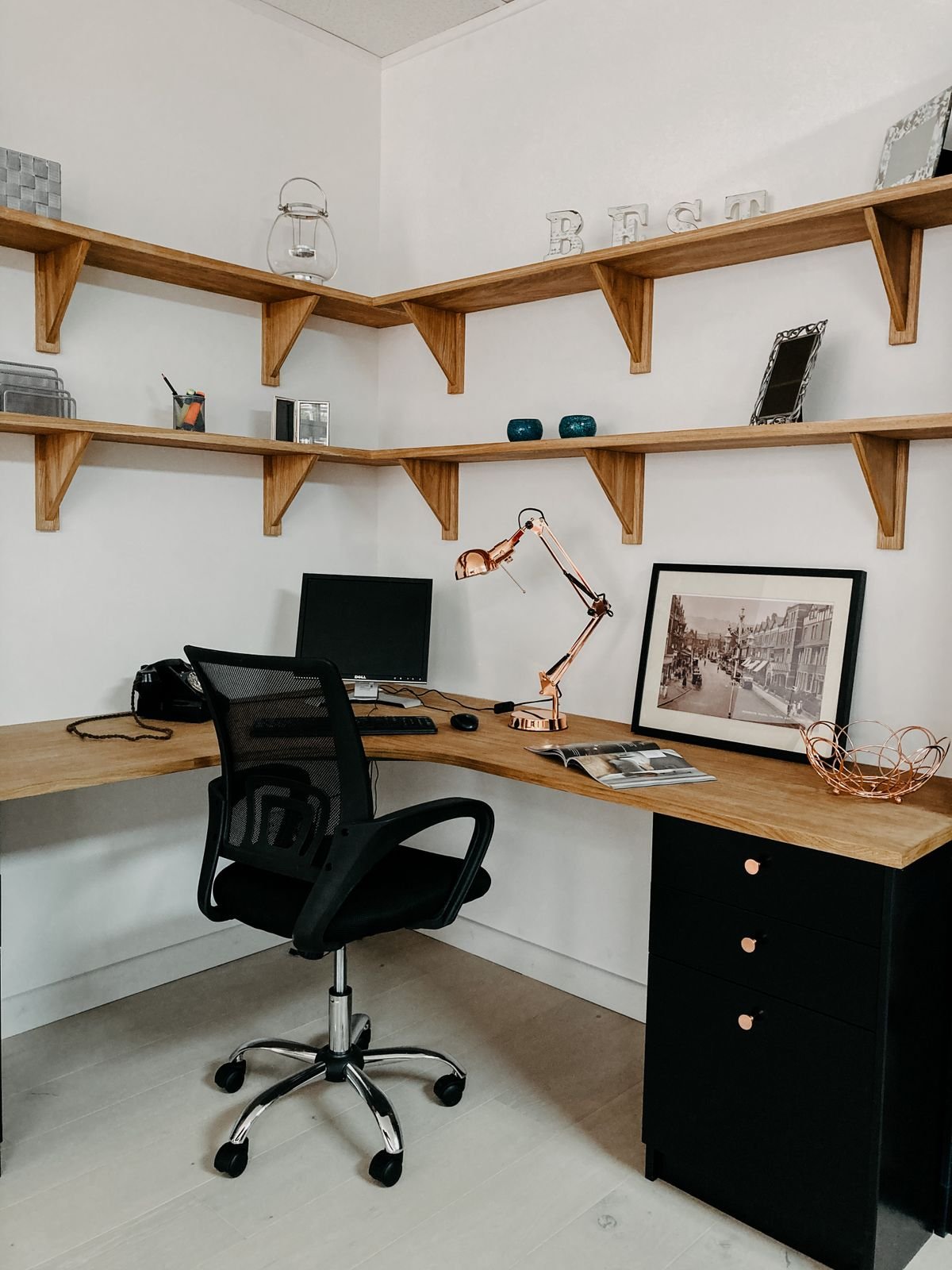
Look for a corner that’s out of the main walkway, ideally near a window for light and an outlet for power. Corners are perfect for a small office because two walls do the work of containing the zone, and a corner desk or a small desk pushed into the angle uses space that’s otherwise dead.
Step 2: Anchor It With a Compact Desk
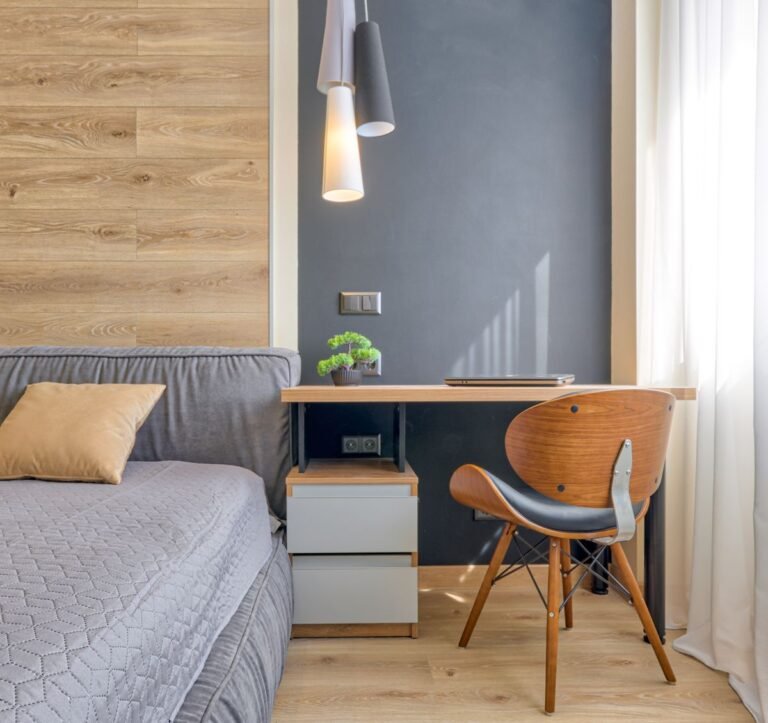
The desk defines the corner. A shallow compact desk tucks into the angle without projecting into the room; a folding desk lets the corner double as something else when you’re off the clock; a wall-mounted fold-down desk keeps the floor completely clear. Choose based on whether the corner needs to do other jobs — see our compact desk picks and folding desk picks.
Step 3: Define the Zone
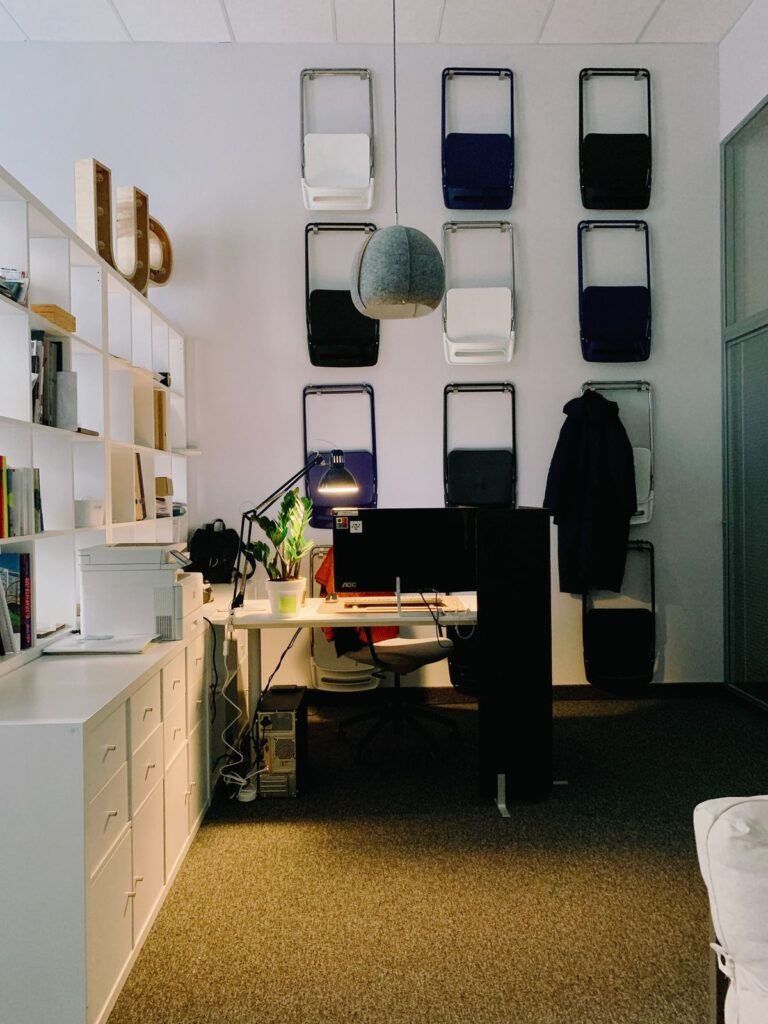
The trick that makes a corner feel like a real office is visual separation. A small rug under the desk, a different light (a focused task lamp), and shelves above the desk all signal “this is the work zone.” Going vertical with floating shelves keeps storage in the corner instead of spreading across the apartment.
Step 4: Keep It Contained
In a studio, the office has to stay in its lane. Tidy cables so nothing trails across the floor, keep the desktop clear by storing supplies vertically, and use an armless chair that tucks fully under the desk so the corner reads as closed when you’re not working. The goal is a zone you can mentally “leave” at the end of the day.
Making Your Studio Work Corner Work
A work corner in a studio comes down to definition, not square footage — the right desk in the right corner, visually separated. Use the steps above to anchor and contain your work corner. Keep the work corner tidy and it reads as a real office.
Bottom line: a defined work corner turns wasted space into a real desk zone. Anchor the work corner with a compact desk, add light, and keep it contained — a good work corner ends the workday when you step away.
Related Buying Guides
Frequently Asked Questions
How do I create a work corner in a studio apartment?
Pick an out-of-the-way corner near light and an outlet, anchor it with a compact or folding desk, then define the zone with a rug, a task lamp, and shelves above. Keep it contained with tidy cables and an armless chair that tucks away.
Why is a corner good for a small office?
Two walls naturally contain the zone, and corners are often dead space you’re not using for anything else. That makes them the most efficient place to put a desk in a studio without blocking the room.
What desk works best in a corner?
A shallow compact desk pushed into the angle, a folding desk if the corner does other jobs, or a wall-mounted fold-down desk to keep the floor clear. Prioritize shallow depth so it doesn’t jut into the room.
How do I make a corner feel separate from my living space?
Use visual cues: a small rug under the desk, a dedicated task light, and shelves above the desk. These signal a distinct work zone without needing walls or a divider.
How do I stop my work corner from cluttering the apartment?
Store supplies vertically on shelves, tidy cables so nothing trails across the floor, and use an armless chair that tucks under the desk. Containing everything to the corner keeps the rest of the studio livable.
Final Thoughts
A studio work corner is about definition, not square footage: the right desk in the right corner, visually separated and kept contained. Start with the anchor — a compact desk — and read our full small-space home office setup guide for the rest.